On the Cool, Curious, and Courtly History of “Nonchalance”
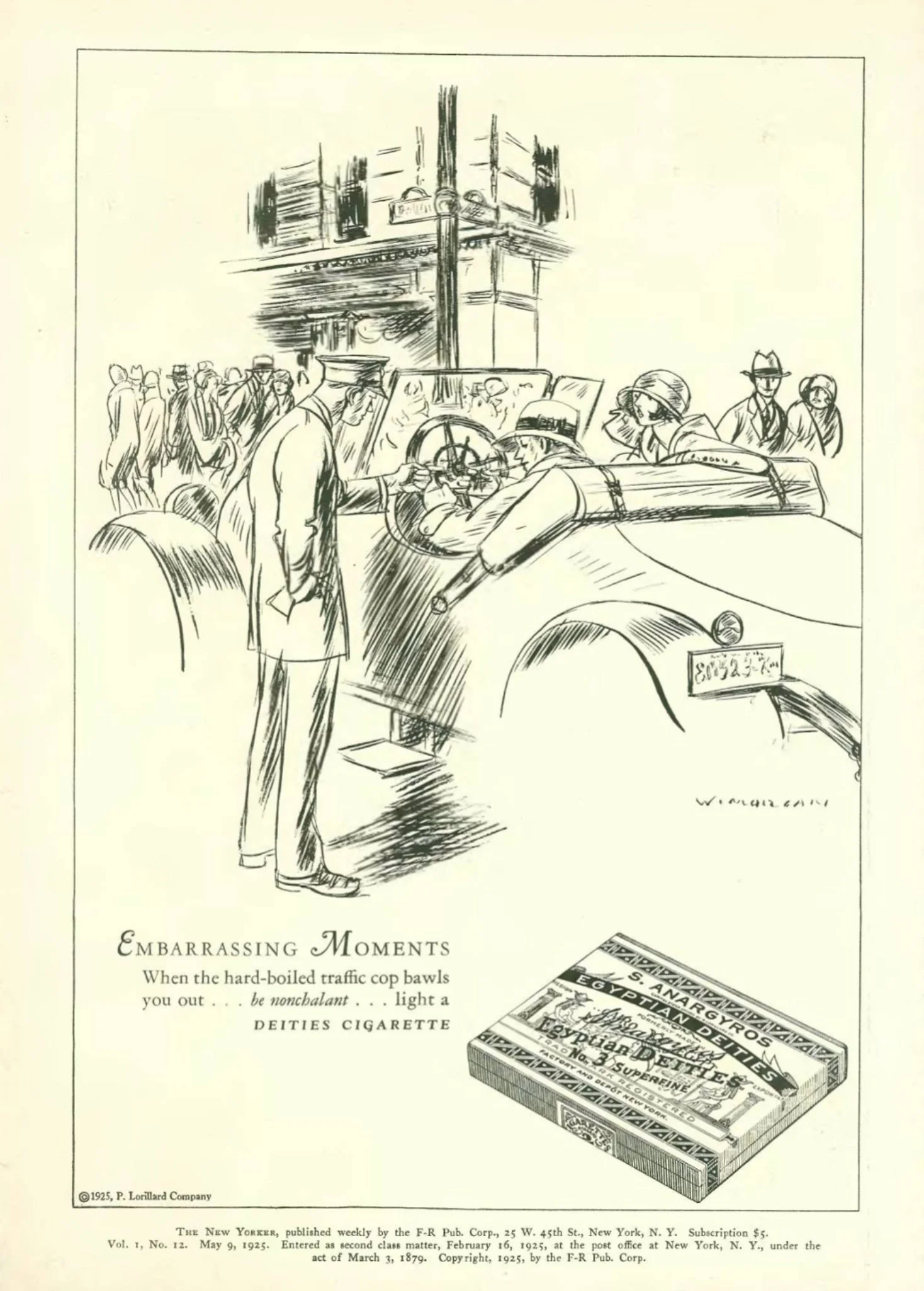
Nonchalance is having a bit of a moment among Zoomers. A series of college newspapers over the past year or so have featured op-eds discussing (and objecting to) the so-called “epidemic of nonchalance.” According to these students, there is far too much “performative apathy” among Gen Z—in their studies, their relationships, their hobbies, etc.—all in an effort to avoid the dreaded accusation of being “cringe.”
I’m not all that interested either in assessing whether Zoomers really are too nonchalant or in advising them against it. I am, however, interested in the history of the usage of this word (which itself may fall into cringe territory—whatever). To understand this history, one must begin with the royal court of early-modern Europe.
But first: As defined by the OED, nonchalance refers to a “(deliberate) lack of enthusiasm or interest; casual indifference, unconcern.” The first example the OED cites of this French word used in the English language is from a 1678 letter from an English courtier, Henry Savile, serving under King Charles II: “She . . . is at last tired with the king’s nonchalance in the prosecution of it.” In this letter (notably written in Paris), Savile contrasts the king’s nonchalance with his need to be “a little more vigorous” instead of his “taking so little care” in the matter.
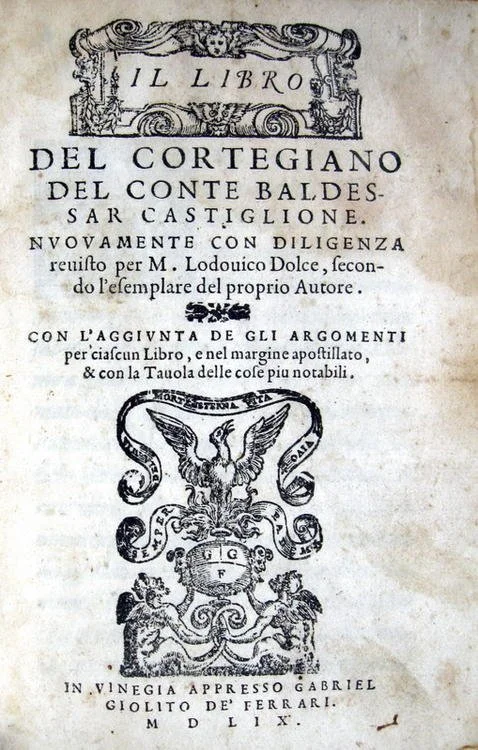
That a courtier like Savile be concerned with nonchalance is unsurprising, given that courtly politics called for it. In 1528, an influential text by the Italian courtier Baldassare Castiglione was published: Il libro del cortegiano, or The Book of the Courtier. This text, outlining the virtues that a man of the king’s court ought to cultivate, proved popular and went through several translations across Europe. In this text, Castiglione invented a neologism for how the courtier ought to act: with sprezzatura. In chapter 26 of book 1, he writes, in the original Italian:
trovo una regola universalissima, la qual mi par valer circa questo in tutte le cose umane che si facciano o dicano più che alcuna altra: e ciò è fuggir quanto più si può, e come un asperissimo e pericoloso scoglio, la affettazione; e, per dir forse una nuova parola, usar in ogni cosa una certa sprezzatura, che nasconda l’arte, e dimostri, ciò che si fa e dice venir fatto senza fatica e quasi senza pensarvi.
As translated in an English edition from 1967, the excerpt reads:
I have discovered a universal rule which seems to apply more than any other in all human actions or words: namely, to steer away from affectation at all costs, as if it were a rough and dangerous reef, and (to use perhaps a novel word for it) to practise in all things a certain nonchalance which conceals all artistry and makes whatever one says or does seem uncontrived and effortless.
I’ve jumped the gun a bit here by providing the modern English translation. But originally, the neologism sprezzatura was translated into Spanish using the word descuido and then despejo. According to the Real Academia Española, one of the meanings of despejo is “Adquirir o mostrar soltura y esparcimiento en el trato,” or, in English, “To acquire or display ease and relaxation in social situations.” In French, before being translated to nonchalance, sprezzatura was translated to le je-ne-sais-quoi, the I-don’t-know-what.
Indeed, a similar Spanish text that was inspired by Castiglione and that became a manual for courtiers, Oráculo manual y arte de prudencia (1647) (or, Manual Oracle and Art of Prudence) by Baltasar Gracián, refers to the same despejo. This Spanish text from a century later, first translated into French and then into English, includes the following excerpt in the 1685 English translation:
The secret charm, or the unexpressible somewhat—what the French call Le je-ne-sais-quoi, and the Spaniards call El despejo—is the life of great qualities, the breath of words, the soul of actions, and the lustre of all beauties. Other perfections are the ornament of nature; the unexpressible somewhat, that of perfections. Is is observable even in the way of reasoning. . . . It holds much more of privilege than of study; for it is even above all discipline. It is not limited to facility, but reaches the finest gallantry. It supposes a free and unstinted mind, and to that unstintedness it adds the last strokes of perfection.
Reason formed part of this quality: It was a rational, and therefore virtuous, even-keeledness not prone to fluctuating passions. As one of my mentors, the historian Roger Chartier, writes in his work Won in Translation: Textual Mobility in Early Modern Europe (2022), “Despejo and Je-ne-sais-quoi represent virtuous behavior that takes place effortlessly, in an entirely free and detached manner.” In short, the courtier was to exhibit an effortless grace before the king, especially under pressure, and to dissemble (or conceal) any kind of unease or angst. This sprezzatura would win the courtier some level of respect, trust, and ultimately favor from the king.
Another historian, Richard Scholar, traces the roots of the French phrase in The Je-Ne-Sais-Quoi in Early Modern Europe: Encounters with a Certain Something, noting it as a “keyword” of the early-modern period that “designate[d] a ‘something’ whose nature may be elusive but can certainly be investigated.” He cites French thinkers ranging from Michel de Montaigne to Blaise Pascal who use this phrase in different contexts, giving the term wider application. But for our purposes here, the phrase, translated (as seen above) as “the unexpressible somewhat” eventually gets rendered in English, ironically, into the French nonchalance.
And this word is quite perfect for what it describes, given the etymology of nonchalant: “present participle of nonchaloir (‘be indifferent to, have no concern for’) (13c.), from non- (‘not’) + chaloir (‘have concern for’), ultimately from Latin calere (‘be hot’).”
In other words, to be nonchalant is to be cool, as cool as a courtier. But in this case, this coolness is less “too cool for school” and more “cooler heads prevail.”