On Orwell’s “Politics and the English Language” at 80
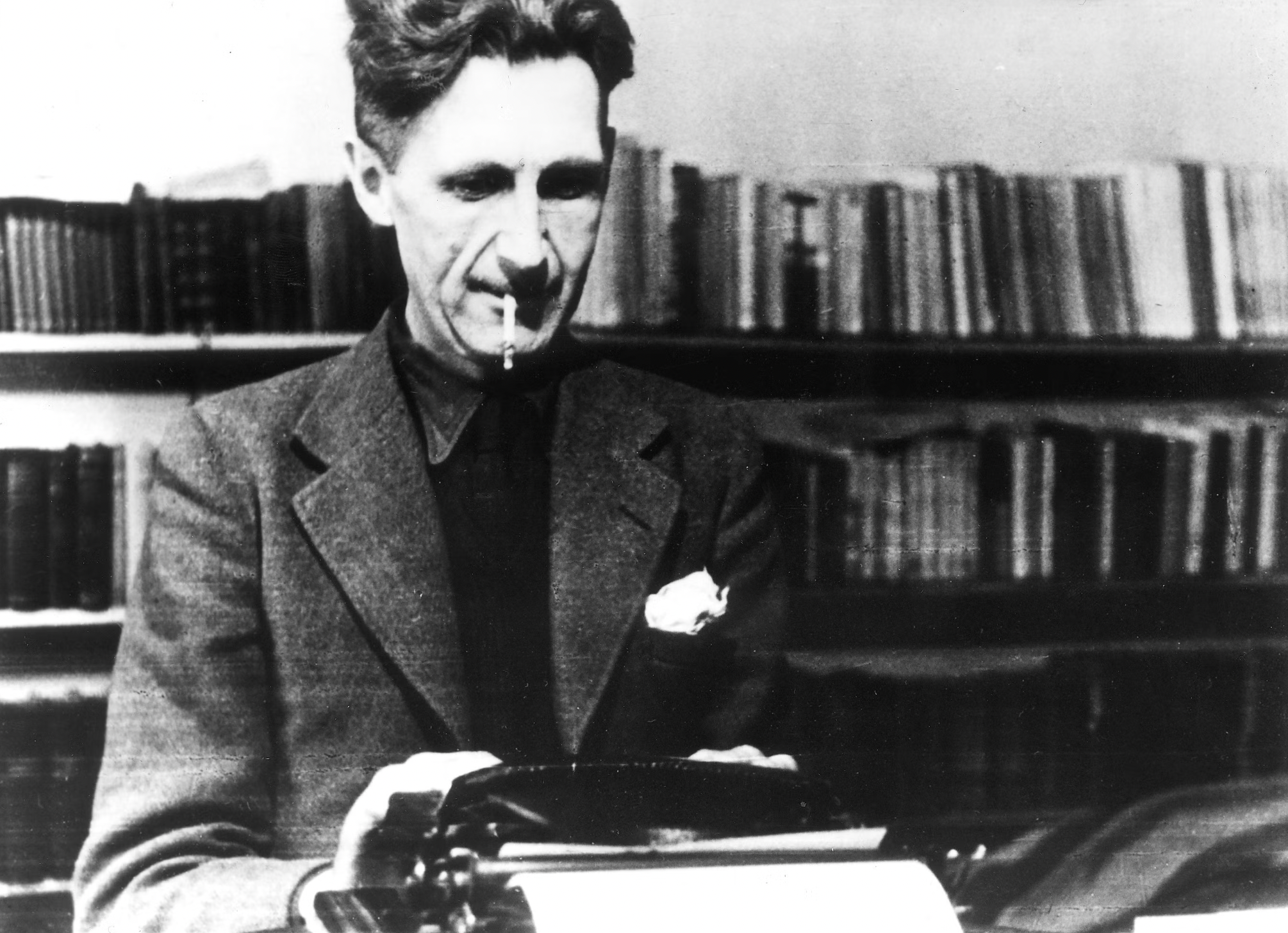
We’re coming up on the 80th anniversary of George Orwell’s famous essay, “Politics and the English Language,” written in 1946 in the aftermath of World War II. And in today’s age of disinformation and misinformation, this essay is as relevant as ever. For this reason, I’d like to evaluate his piece, however briefly.
I’ve long held that clear writing reflects clear thinking—and that therefore the converse is true. Poor writing, whether due to clichés, vague phrasing, or limited vocabulary, ultimately reflects the writer’s own superficial thinking that often cannot withstand much scrutiny. Orwell makes this point early on in his essay, highlighting the importance of clear writing and suggesting it has broader social and political ramifications: The English language, he notes,
becomes ugly and inaccurate because our thoughts are foolish, but the slovenliness of our language makes it easier for us to have foolish thoughts. The point is that the process is reversible. Modern English, especially written English, is full of bad habits which spread by imitation and which can be avoided if one is willing to take the necessary trouble. If one gets rid of these habits one can think more clearly, and to think clearly is a necessary first step toward political regeneration: so that the fight against bad English is not frivolous and is not the exclusive concern of professional writers.
Orwell goes on to provide many examples of the kind of writing he objects to, and he dissects these examples, like the dead corpses they are, to show the rhetorical maladies they’ve succumbed to: in particular, dying metaphors, “verbal false limbs,” pretentious diction, and meaningless words.
But the larger point he makes in this essay is that this kind of writing becomes unoriginal, stale, and formulaic, which in turn makes it easy (and thus attractive) for the writer to replicate, making that writer surrender his or her own thinking to ready-made phrases that supplant or obfuscate whatever original thought was there. In his words, “By using stale metaphors, similes, and idioms, you save much mental effort, at the cost of leaving your meaning vague, not only for your reader but for yourself.”
These practices, however, aren’t limited to just those who naively employ them. Often, as Orwell observes, writers will use this kind of prose intentionally to deceive their readers. He emphasizes a number of euphemisms used in geopolitical discussions that would be familiar to us in our own present-day global conflicts. As he puts it, “The great enemy of clear language is insincerity. When there is a gap between one’s real and one’s declared aims, one turns as it were instinctively to long words and exhausted idioms, like a cuttlefish spurting out ink.”
As a brief aside, as I reread this essay, I was struck by this image of the cuttlefish. In my previous post on nonchalance, I mention a Spanish text from the seventeenth century, the Oráculo manual by Baltasar Gracián (traditionally translated as The Art of Worldly Wisdom). It’s a collection of some 300 maxims on how to advance in society, and one of the maxims uses the imagery of a cuttlefish in showing how to disimular, or conceal, one’s true motives. In maxim 98, “Conceal your wishes,” Gracián writes:
Passions are breaches in the mind. The most practical kind of knowledge is dissimulation; whoever plays their hand openly runs the risk of losing. Let the reserve of the cautious compete against the scrutiny of the perceptive; against the sharp eyes of the lynx, the ink of the cuttlefish. Don’t let your desires be known so that they won’t be anticipated, either by opposition or flattery. (Translation by Jeremy Robbins)
Gracián uses the image favorably, but in the case of a writer, who literally spurts out ink, Orwell would opt for the calligrapher who uses ink for precision over the cuttlefish who uses it for obfuscation. And it is here that Orwell makes the connection between language and politics explicit. He states, “Political language—and with variations this is true of all political parties, from Conservatives to Anarchists—is designed to make lies sound truthful and murder respectable, and to give an appearance of solidity to pure wind.”
Whatever your political persuasion, you could probably come up with a very long list of examples of this sort from just the last year. But to keep this post short, I’ll end with Orwell’s proposed prescriptions, what his essay is perhaps best known for: the six “elementary” rules it provides for clear and effective writing. The rules Orwell provides are the following:
1. Never use a metaphor, simile, or other figure of speech which you are used to seeing in print.
2. Never use a long word where a short one will do.
3. If it is possible to cut a word out, always cut it out.
4. Never use the passive where you can use the active.
5. Never use a foreign phrase, a scientific word, or a jargon word if you can think of an everyday English equivalent.
6. Break any of these rules sooner than say anything outright barbarous.
It’s a good list, but I would humbly add two more rules:
7. Avoid using the word interesting (which his essay uses only once, in a footnote) to describe anything since it is an always ambiguous, often misleading adjective. (I’ve written about this least favorite word of mine here.)
8. Avoid using this or that as demonstrative pronouns; use them instead as adjectives. For example, Orwell himself in this essay, at the end of a full paragraph of linguistic practices that one ought to avoid, writes, “The defence of the English language implies more than this.” More than what, exactly? He leaves it to the reader to assume “more than avoiding these practices” or something similar. But if one values clarity over ambiguity, one ought to avoid the generic this.
As I mentioned at the beginning, 80 years later, Orwell’s essay still remains incredibly relevant in 2026. I encourage you to (re)read it.