On “I Feel Like” and “I Don’t Know”
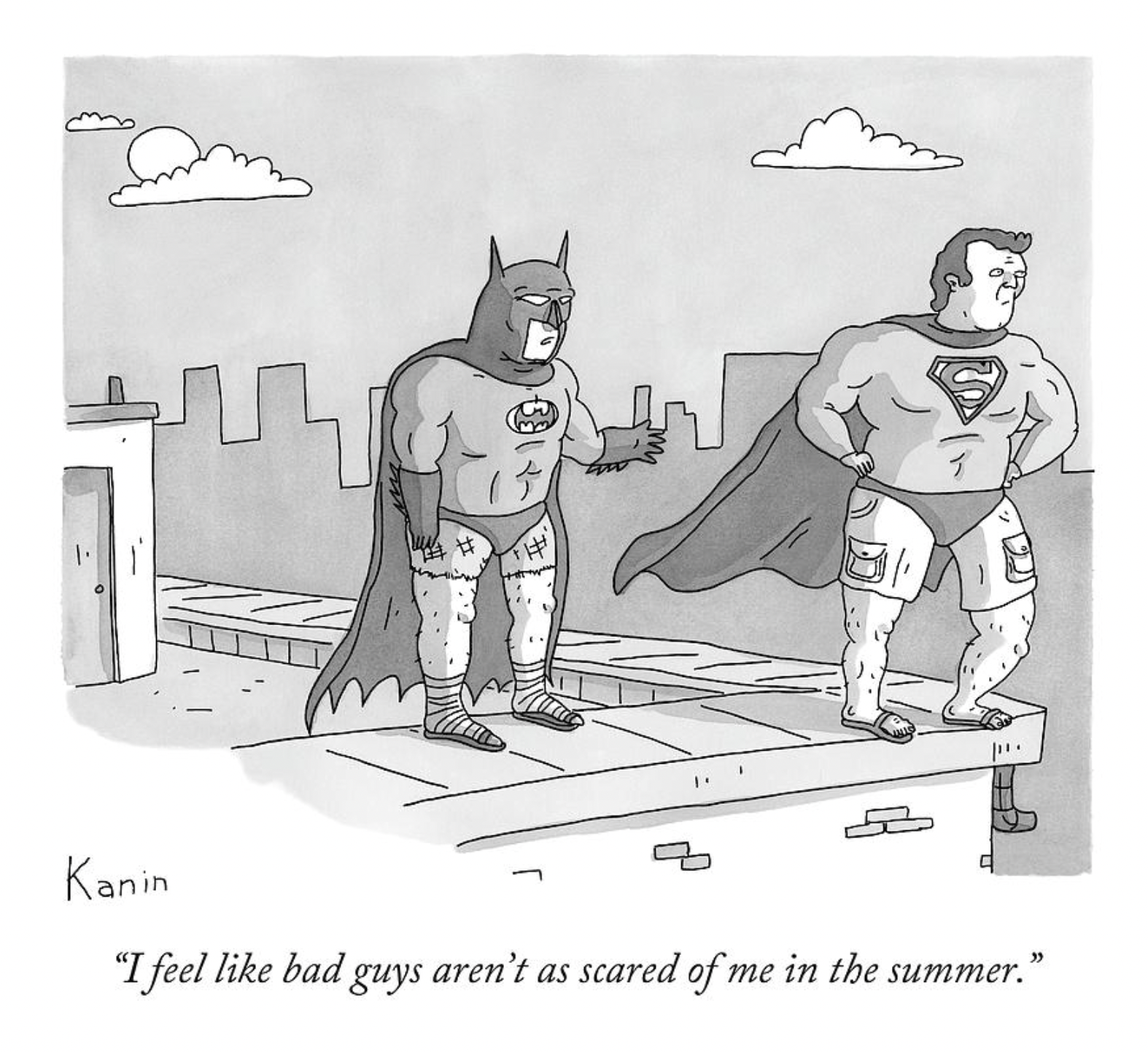
For several years now, I’ve noticed a pair of rhetorical crutches take over. One of them is the introductory phrase, “I feel like,” followed by an opinion or observation, then closed by the phrase, “I don’t know.”
With the first, I’m not referring here to when the phrase is used to describe a sensation (e.g., “I feel like a pedant for writing this post”) or a desire (e.g., “I feel like writing it anyway”). Instead, I mean when it’s used in lieu of “I think” or “I believe.”
There’s an inherent irony to this phrase used in this way: It at once personalizes the opinion or observation being shared by identifying it with one’s emotions while at the same time acting as a sort of qualifier that distances oneself from that very same opinion or observation, especially if it may elicit some disagreement. Rather than outright declaring, “Dogs are more loyal than cats,” “I feel like dogs are more loyal than cats” not only makes the view personal but also thereby works to soften the stance.
Obviously, the phrase isn’t very accurate: Whether you find dogs to be more loyal than cats is more a matter of belief than of feeling. But I don’t have much of a problem with people using the phrase per se. The problem is with its ubiquity, which I think reveals something broader about our culture. It’s a way of wrapping up one’s opinions with one’s identity, avoiding confrontation, and perhaps even discouraging one’s interlocutor from challenging said opinions.
Moreover, besides making one’s point weaker, the phrase can be deceptive. I’m not the first to point out this phenomenon, and in a post from ten years ago, this writer points out the following:
Using a big, wimpy hedge to obscure nearly every criticism, complaint, observation, or opinion seems annoying, insulting, and transparently deceptive. It’s annoying because it gives me extra work to do: If we’re having a conversation and you say, “I feel like . . .” suddenly it’s my job to establish the exact nature of your commitment to your own opinion. It’s insulting and transparently deceptive because, in those cases when you’re using the phrase in a snarky, passive-aggressive way, I feel the need to glare at you and say something like “We’re not in a middle-school health class. Please describe your grievance, and I will do my best to help.” For the sake of efficiency and honesty, shouldn’t we just state plainly our criticisms and desires?
This writer also mentions that there’s a gendered aspect to the phrase, with women using it more often than men, “who have been socially conditioned to make direct, unqualified claims all their lives.” There may be some truth to that claim, but ten years later and in my experience, both in and out of the classroom, I see men falling back on the phrase just as often as women. (He later acknowledges that men hedge just as much as women do in their speech but merely use different phrases to do so, but it’s all irrelevant to my broader point here.)
The other hedging phrase that often closes these opinions and observations is “I don’t know”: e.g., “I feel like dogs are more loyal than cats, but I don’t know.” As with “I feel like,” there is an irony with this latter phrase’s usage. It often comes after a perfectly coherent (even if contentious) opinion, one much more elaborate than my short example, that suggests the speaker does, in fact, know about what he or she is discussing.
The hedging sandwich that results simply fills the conversation with empty rhetorical calories. For this reason, I’ve encouraged my students on a few occasions to avoid these phrases and to just own their opinions and observations—to put them out there and let the chips fall where they may. Doing so does not prevent them from amending or retracting their statements afterward. But ultimately, when positions are stated directly, discussions will end up being that much more fruitful.